
The Infrastructure Paradox in Large-Scale AI
As software architects, we often treat compute capacity as an abstraction—a nearly infinite pool of cycles ready to be consumed by high-parameter models like Meta’s Muse. However, the November 2026 Sustainability Report from Meta Platforms serves as a stark, reality-based reminder that AI architecture has a physical footprint. With Scope 3 emissions rising 45% to 11.8 million metric tons, we are seeing the direct correlation between massive capital expenditure and environmental debt.
The Scope 3 Bottleneck: Capital Goods as Carbon
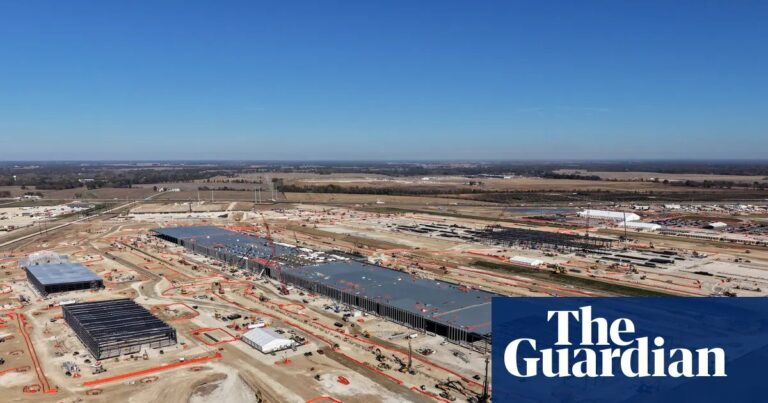
The core of this issue lies in Scope 3 emissions, which now account for 99% of Meta’s total carbon footprint. For the engineering organization, this is critical: 73% of those emissions are tied to capital goods—servers, specialized networking gear, and the raw construction materials required for data centers. When we design for exascale AI, we aren’t just architecting software; we are consuming massive quantities of steel, concrete, and silicon that carry a heavy, front-loaded carbon cost before a single inference task is executed. Learn more about the technical challenges of grid interconnection via authoritative industry standards.
Engineering Trade-offs and the Growth Trap
Meta’s struggle to maintain its 2030 net-zero goals reflects a broader industry trend where compute-intensive demand outpaces grid decarbonization. From a systems perspective, the latency in clean energy integration—slow permitting and transmission bottlenecks—means that every new GPU cluster brought online effectively forces a reliance on a dirtier energy mix. While the revenue growth of companies like Alphabet (via Google Cloud) suggests the financial model for this expansion is maturing, the technical debt of building physical infrastructure at this velocity remains largely unaddressed.
Architectural Sustainability in 2027
For engineering leadership, the path forward requires moving beyond simple power-matching strategies. We must prioritize algorithmic efficiency and investigate the viability of model distillation and hardware-aware optimization to reduce the cumulative compute required for global deployment. Without a pivot toward minimizing the ‘energy-per-token’ metric, these large-scale deployments may find their scalability restricted by the very grid constraints that Meta is now grappling with. You can track technical benchmarks and optimization research on arXiv.
Read more: Nvidia’s Earnings Beat and the AI Infrastructure Reckoning
Read more: Data Center Permitting Risk: Engineering Resilience Against Infrastructure Gridlock