
For enterprise system architects and distributed infrastructure teams, export controls have historically been treated as physical supply-chain constraints. If an accelerator cluster was physically delivered to an authorized jurisdiction, hardware compliance was effectively achieved. However, the legal and operational boundaries around AI compute are undergoing a structural shift. Nvidia’s recent warnings to downstream cloud partners regarding the proposed Remote Access Security Act (RASA) signal that export enforcement is moving directly into the virtualization, telemetry, and networking layers.
The Policy Pipeline: Extending Physical Sanctions to Cloud Virtualization
Under standard export control paradigms managed by the U.S. Commerce Department’s Bureau of Industry and Security (BIS), physical silicon shipments of high-performance accelerators—such as H100 and B200 clusters—are heavily restricted. Yet, compute abstraction layers naturally bypass geographic borders: an inference engine or pre-training job running on an overseas cluster can be accessed via simple REST APIs or SSH tunnels from anywhere in the world.
The legislative mechanism of RASA, coupled with the BIS interim final rule targeting overseas data centers, attempts to treat remote compute access identically to physical hardware distribution. Consequently, Nvidia informed enterprise customers that deploying more than 50% of their GPU capacity to Chinese clients could halt future hardware shipments, effectively forcing cloud providers to construct identity-aware compute pipelines.
Engineering Trade-offs in Multi-Tenant GPU Clusters
From an AI research and infrastructure engineering standpoint, enforcing tenant nationality or cross-border access controls fundamentally alters cluster economics and resource scheduling algorithms:
- Virtual Slicing & Isolation: Utilizing technologies like Multi-Instance GPU (MIG) or hardware hypervisors requires deeper integration with identity providers (IdP). Workloads can no longer be scheduled purely on cost-performance metrics or thermal efficiency; orchestrators like Kubernetes must implement geo-fencing and strict tenant telemetry at the pod scheduling layer.
- Arbitrary Quota Ceilings: Mandating that at least 50% to 51% of GPU capacity serve verified non-Chinese entities disrupts standard bin-packing optimization. Cloud operators face synthetic utilization cliffs where hardware sits idle to maintain required non-restricted tenant ratios.
- Audit Logging and Zero-Trust Telemetry: Compliance can no longer rely on self-reported end-user declarations. As reporting from outlets like Wired has documented across digital policy enforcement, runtime verification often demands continuous packet inspection, egress tracking, and verified attestation down to the individual training container.
The Post-Huang Era and Infrastructure Fragility
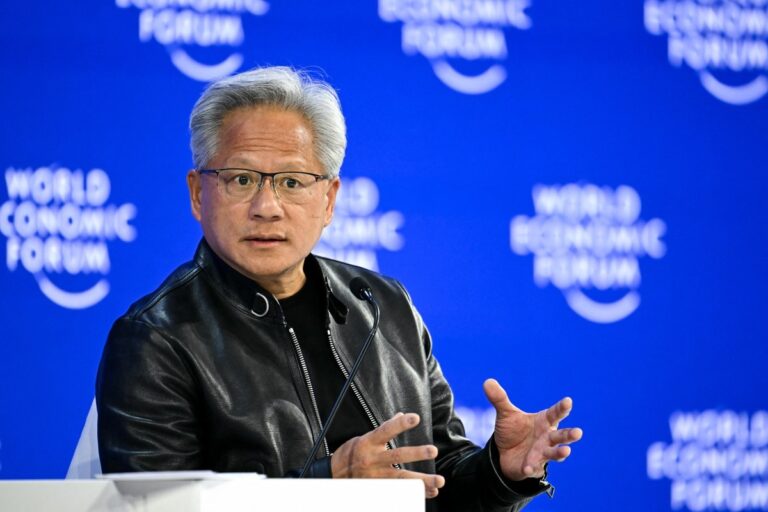
The timing of these advisories intersects with significant governance shifts, marked by Jensen Huang stepping down as CEO and upcoming congressional testimony before the Senate Banking Committee. In regulatory filings, Nvidia maintained that it cannot exercise continuous physical control of processors post-sale, relying instead on customer compliance systems.
However, when regulatory bodies demand active enforcement at the infrastructure level, the burden falls on systems engineers. If infrastructure platforms are held legally accountable under RASA for remote workloads, data center operators will have to embed rigorous, low-latency compliance validation directly into container runtimes, API gateways, and RPC interfaces.
Read more: The Carbon Cost per Token: Hyperscaler Energy Budgets and the Architecture of Compute
Read more: TSMC Taps Xintec: Scaling Advanced Packaging Architecture for Next-Gen AI Silicon